

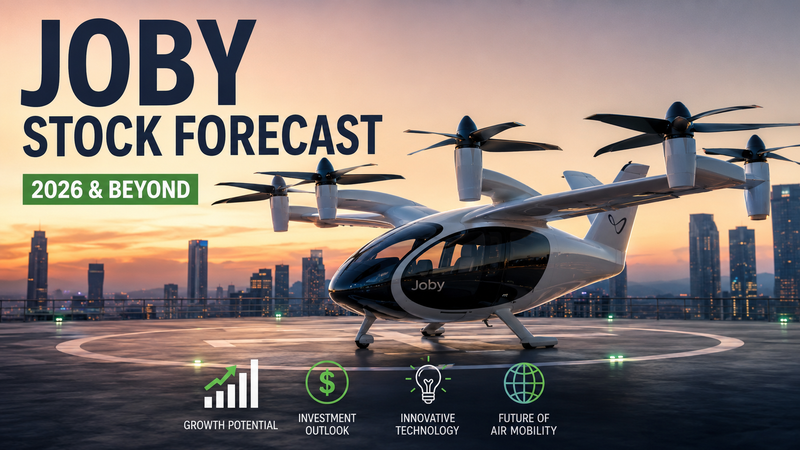
The JOBY stock forecast has become one of the most searched topics among investors interested in electric aviation and next-generation transportation. Joby Aviation is developing electric vertical takeoff and landing (eVTOL) aircraft designed to transform urban mobility by offering faster, quieter, and more sustainable air travel. As commercialization moves closer, many investors are wondering whether JOBY stock has the potential to deliver strong long-term returns. Although no stock forecast can guarantee future performance, understanding Joby Aviation’s business model, financial health, partnerships, industry trends, and risks can help investors make informed decisions. This article explores the latest JOBY stock forecast, key growth drivers, expert expectations, and whether the company could become a major player in the emerging air taxi industry.
What Is Joby Aviation?
JOBY stock represents Joby Aviation, Inc., a California-based aerospace company focused on developing fully electric air taxis. Unlike traditional aircraft manufacturers, Joby aims to revolutionize urban transportation through electric vertical takeoff and landing aircraft capable of carrying passengers over short distances while producing significantly less noise and zero operational emissions.The company has attracted attention from both institutional and retail investors because of its innovative technology and ambitious vision. Joby has invested years in research, aircraft testing, battery development, and certification processes to prepare for commercial operations. It also continues working closely with aviation regulators to obtain the approvals necessary for passenger flights. As interest in sustainable transportation grows worldwide, JOBY stock has become increasingly popular among investors looking for exposure to future mobility technologies rather than traditional automotive or airline companies.
Forecast for 2026
The current JOBY stock forecast remains largely dependent on the company’s ability to achieve important business milestones over the next several years. Investors are closely monitoring aircraft certification, commercial launch timelines, manufacturing expansion, and revenue generation before making long-term valuation decisions. If Joby successfully launches commercial air taxi services and continues securing regulatory approvals, analysts believe the company could experience stronger investor confidence. Positive announcements involving fleet expansion, government partnerships, or successful commercial operations may also improve market sentiment. However, investors should remember that growth companies often experience significant share price volatility. Delays in certification, increased development costs, or slower-than-expected adoption could impact future stock performance. For this reason, most forecasts emphasize long-term potential rather than short-term price movements.
Key Growth Drivers
Several important factors influence the future direction of the JOBY stock forecast. One of the biggest drivers is regulatory approval from aviation authorities, which is necessary before commercial passenger operations can begin. Any progress toward certification is generally viewed positively by investors. Another major factor is production capacity. Joby must demonstrate that it can manufacture aircraft efficiently while maintaining high safety standards. Strategic partnerships with technology companies, government agencies, and transportation providers could further strengthen investor confidence. Financial performance also plays an important role. Investors closely monitor cash reserves, operating expenses, research spending, and funding requirements. Since Joby is still investing heavily in growth rather than generating substantial revenue, maintaining a strong financial position is essential for long-term success.
Business Model Explained
Understanding the company’s business model is essential when evaluating the JOBY stock forecast. Unlike companies that simply manufacture aircraft, Joby plans to operate its own electric air taxi network in selected cities. This approach allows the company to generate recurring revenue directly from passenger transportation services instead of relying solely on aircraft sales. Its electric aircraft are designed for short-distance urban travel, reducing traffic congestion while offering environmentally friendly transportation. The company also focuses on lower operating costs through electric propulsion and simplified aircraft maintenance. If the business model proves commercially successful, Joby could expand into multiple global markets over time. Investors believe this combination of advanced technology and recurring service revenue could become one of the company’s strongest competitive advantages.
Financial Performance
Financial stability is another important element affecting the JOBY stock forecast. Since Joby is still in the development stage, investors pay closer attention to its balance sheet, available cash, quarterly losses, and funding strategy than traditional earnings metrics. The company has raised significant capital from investors and strategic partners to support aircraft development, manufacturing facilities, certification efforts, and commercial expansion. Maintaining adequate liquidity allows Joby to continue investing in innovation without immediately relying on substantial operating revenue. Investor confidence also depends on management’s ability to meet development targets while controlling expenses. Quarterly reports, business updates, and progress toward commercialization often have a noticeable impact on share price movements. Long-term investors generally focus more on execution than short-term earnings.
Growth Opportunities
Several long-term opportunities support a positive JOBY stock forecast. Urban air mobility is expected to become a rapidly growing industry as cities search for cleaner, faster, and more efficient transportation solutions. Joby is among the companies attempting to establish an early leadership position in this emerging market. Growing environmental awareness may also increase demand for electric aviation. Governments worldwide continue supporting cleaner transportation technologies through regulations, incentives, and infrastructure investments. Additionally, partnerships with airlines, ride-sharing platforms, airports, and government organizations could accelerate commercial adoption. As production scales and operating costs decline, Joby’s business could become increasingly attractive to passengers seeking convenient alternatives to traditional ground transportation.
Investment Risks
Despite its exciting growth potential, every JOBY stock forecast must also consider the risks involved. The company operates in a highly regulated industry where certification delays can significantly impact commercialization timelines. Competition is another major challenge. Several companies are developing similar electric aircraft technologies, increasing pressure to innovate quickly while maintaining safety standards. Joby must continue differentiating itself through technology, reliability, and operational efficiency. Financial risks should also be considered. Research, manufacturing expansion, and certification require substantial capital investment. If development costs exceed expectations or commercial adoption takes longer than anticipated, additional financing may become necessary. Investors should balance these risks against the company’s long-term growth opportunities before making investment decisions.
Analyst Opinions
Analyst opinions play an important role when discussing the JOBY stock forecast, but investors should remember that forecasts are estimates rather than guarantees. Analysts evaluate factors such as the company’s financial position, product development, regulatory progress, market demand, and competitive advantages before issuing ratings or price targets. Some analysts remain optimistic because Joby Aviation has established itself as one of the leading companies in the electric air mobility industry. They believe successful aircraft certification and commercial operations could significantly improve future revenue potential. Others take a more cautious approach, pointing to the uncertainty surrounding commercialization timelines and the capital-intensive nature of the business. Instead of relying on a single forecast, investors should compare multiple professional opinions while also conducting their own research. A balanced approach helps reduce emotional investment decisions and provides a better understanding of both the opportunities and the risks associated with JOBY stock.
Industry Trends
The broader aviation industry has a major influence on the JOBY stock forecast. Around the world, governments and transportation companies are investing in cleaner and more sustainable mobility solutions. Electric aircraft are becoming an important part of this long-term transition, creating favorable conditions for companies like Joby Aviation. Urbanization is another important trend supporting future growth. As cities become more crowded, demand for faster transportation options continues to increase. Air taxi services could eventually reduce travel times while minimizing traffic congestion in major metropolitan areas. Technological improvements in battery performance, electric propulsion systems, and autonomous flight technology may also strengthen Joby’s competitive position. If these innovations continue advancing over the coming years, they could improve operational efficiency and make commercial air taxi services more practical for everyday transportation.
Is JOBY Stock a Good Long-Term Investment?
Many investors consider the JOBY stock forecast attractive because of the company’s long-term growth potential rather than immediate profitability. Joby operates in an emerging industry that could reshape urban transportation over the next decade. If management successfully executes its business strategy, the company may benefit from being an early market leader. However, long-term investing requires patience. Commercial aviation projects often take years to generate consistent revenue, and investors should be prepared for periods of stock price volatility. Short-term market fluctuations do not always reflect the company’s long-term business prospects. For investors with a higher risk tolerance, JOBY may represent an opportunity to gain exposure to innovative transportation technology. Conservative investors, however, may prefer waiting until commercial operations become more established before building a larger position.
Tips for Investors
Using the JOBY stock forecast wisely involves more than simply following market predictions. Investors should first evaluate their financial goals, investment timeline, and willingness to accept risk before purchasing shares of growth companies like Joby Aviation. Diversification remains one of the most effective investment strategies. Rather than placing all available funds into a single stock, spreading investments across multiple industries can reduce overall portfolio risk. This approach helps protect investors if one company experiences unexpected setbacks. It is also important to monitor quarterly earnings reports, regulatory updates, certification progress, partnership announcements, and industry developments. Staying informed enables investors to adjust their strategies as new information becomes available while avoiding decisions based solely on short-term market speculation.
Common Risks That Could Impact JOBY Stock
Although many investors remain optimistic, every JOBY stock forecast should include the risks that could influence future performance. One major concern is regulatory approval. If certification takes longer than expected, commercial launches may be delayed, affecting investor confidence. Another challenge is increasing competition within the electric aviation industry. Several companies are racing to introduce similar aircraft, making innovation and execution essential for maintaining market leadership. Failure to keep pace with competitors could reduce future market share. Macroeconomic conditions may also affect investor sentiment. Rising interest rates, economic slowdowns, or reduced access to capital could pressure high-growth companies. Understanding these external risks allows investors to build realistic expectations while preparing for potential market volatility throughout the company’s growth journey.
Final Thoughts
The JOBY stock forecast remains closely tied to the company’s ability to transform innovative technology into a successful commercial business. Joby Aviation has positioned itself as a leader in electric air mobility through years of research, aircraft development, strategic partnerships, and regulatory progress. While significant challenges remain, including certification timelines, competition, and ongoing investment requirements, the company’s long-term vision continues to attract investors interested in next-generation transportation. Those willing to accept higher levels of risk may find Joby an interesting growth opportunity within the evolving aviation sector. Ultimately, investors should treat stock forecasts as one part of a broader research process. Evaluating financial reports, industry trends, company announcements, and personal investment goals will always provide a stronger foundation for making informed investment decisions.
FAQs
1. What is the latest JOBY stock forecast?
The JOBY stock forecast depends on regulatory approvals, commercial launches, financial performance, and overall investor confidence in the electric aviation industry.
2. Is JOBY stock a good long-term investment?
JOBY may offer long-term growth potential, but it also carries significant risks because the company is still developing its commercial business.
3. What factors affect the JOBY stock forecast?
Important factors include aircraft certification, partnerships, financial stability, production capacity, competition, and demand for urban air mobility.
4. Can JOBY stock become profitable?
Profitability will largely depend on successful commercialization, expanding operations, and generating consistent passenger service revenue.
5. Should beginners invest in JOBY stock?
Beginners should carefully research the company, understand the risks involved, and diversify their portfolios before investing in any high-growth stock.